Why Saefoq Is the Gothic Typography Choice You Didn’t Know You Needed
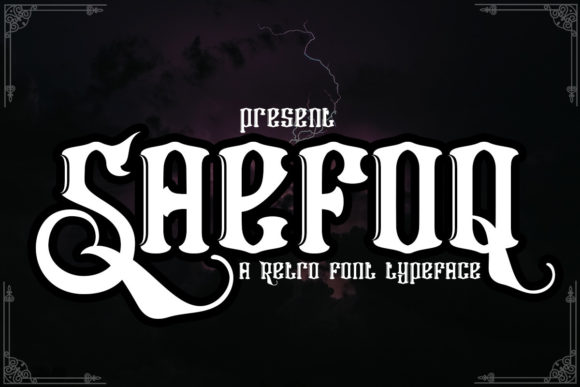
Typography is rarely just about reading; it is about feeling. When you choose a font, you are selecting the voice of your design before a single word is spoken. For designers, marketers, and creators who need to convey authority, history, or a touch of dark elegance, standard serif fonts often fall flat. They feel too corporate, too safe, or too modern for the specific mood you are trying to set. This is where Saefoq enters the conversation. It is not merely another blackletter typeface; it is a meticulously crafted, gothic-styled font that offers a level of detail and accessibility that many premium competitors simply do not match.
If you have been struggling to find a display font that balances historical authenticity with modern usability, you are likely looking at the wrong tools. Many users assume that high-quality blackletter fonts are difficult to use, expensive, or limited in their character sets. These assumptions can lead to frustrating workflows and designs that look amateurish rather than authoritative. Understanding the unique architecture of Saefoq—specifically its PUA encoding and extensive glyph library—can transform how you approach branding, event invitations, album covers, and editorial layouts.
The Hidden Cost of Poor Font Selection
One of the most common mistakes beginners make when incorporating gothic or blackletter styles into their projects is prioritizing aesthetics over functionality. It is easy to be drawn to a heavy, ornate font because it looks impressive on a mockup. However, if that font lacks proper kerning, has inconsistent stroke weights, or requires complex manual adjustments for every letter, your production time will skyrocket. More importantly, the final result may lack the polish required for professional presentation.
Many users overlook the technical backend of a font file. A visually stunning font that is poorly encoded can cause rendering issues across different browsers, operating systems, and design software. This leads to broken text, missing characters, or inconsistent spacing that undermines the credibility of your work. For freelancers and small business owners, this translates directly into wasted hours and dissatisfied clients. The cost is not just monetary; it is the erosion of trust in your professional capability.
Saefoq addresses these pitfalls by being built for ease of access without sacrificing depth. Its gothic styling is sharp and detailed, providing that immediate visual impact of traditional calligraphy, but it is engineered for the digital age. By choosing a font that respects both form and function, you ensure that your creative vision is communicated clearly and efficiently.
Decoding the Advantage: What PUA Encoding Really Means
To truly appreciate Saefoq, one must understand what "PUA encoded" means and why it matters for your workflow. PUA stands for Private Use Area. In simpler terms, this is a reserved space within the Unicode standard where font designers can place additional glyphs that are not part of the standard ASCII or Unicode character set. While this might sound like technical jargon, the practical implication for you is significant.
With standard fonts, accessing special ligatures, decorative swashes, or alternative character forms often requires navigating complex OpenType feature menus or using obscure keyboard shortcuts. This process can be slow and prone to error. Because Saefoq utilizes PUA encoding, you gain direct, easy access to all of its glyphs and swashes. This means you can experiment with intricate decorative elements confidently, knowing that they are integrated seamlessly into the font file itself.
- Streamlined Workflow: You spend less time searching for features and more time creating. The ability to access swashes and alternate glyphs with ease allows for rapid prototyping and iteration.
- Consistency: PUA encoding ensures that these special characters behave consistently across different platforms. You avoid the headache of a swash looking perfect in Photoshop but breaking in your web CMS.
- Creative Freedom: The extensive library of glyphs gives you more tools to customize your typography. You are not limited to the basic alphabet; you have a full palette of decorative options at your fingertips.
Consider the difference between building a house with pre-fabricated walls versus custom-cut timber. With a poorly encoded font, you are constantly cutting and adjusting. With Saefoq, the pieces fit together. This efficiency is crucial for professionals who need to deliver high-quality work under tight deadlines.
Avoiding Common Pitfalls in Gothic Typography
Even with a superior tool like Saefoq, there are ways to misuse gothic typography that can harm your project’s effectiveness. One frequent error is overuse. Blackletter fonts are powerful display types, meaning they are designed to catch the eye, not to be read in long paragraphs. Using Saefoq for body text is a recipe for reader fatigue. The intricate details that make it beautiful also make it difficult to scan quickly. Reserve this font for headlines, logos, titles, and short accents.
Another mistake is ignoring contrast. A dense, heavy font like Saefoq needs breathing room. Placing it against a busy background or pairing it with other heavy, ornate fonts creates visual clutter. To let Saefoq shine, pair it with clean, simple sans-serif or minimal serif fonts for supporting text. This contrast highlights the complexity of Saefoq while maintaining readability.
Furthermore, do not underestimate the importance of color and texture. Gothic fonts carry a certain weight and seriousness. Pairing them with bright, neon colors or overly playful textures can create a dissonant message. Instead, consider deep blacks, rich golds, muted earth tones, or stark whites to complement the font’s inherent gravitas. The outcome generated by these thoughtful combinations will always be more sophisticated and intentional.
Evaluating Your Needs Before You Download
Before integrating Saefoq into your favorite creations, take a moment to evaluate the specific requirements of your project. Ask yourself if the gothic aesthetic aligns with your brand identity or message. Are you designing a metal band’s album cover, a medieval-themed wedding invitation, a craft beer label, or a horror movie poster? In these contexts, Saefoq is an excellent choice. If you are designing a tech startup’s landing page or a children’s educational app, it is likely the wrong tool for the job.
Check the licensing terms carefully. Ensure that the license covers your intended use, whether it is personal, commercial, or broadcast. While Saefoq is designed for ease of use, respecting intellectual property rights protects you from legal complications down the line. Additionally, test the font in various sizes and resolutions. Sometimes, intricate details can get lost at very small sizes, so verify that the legibility meets your standards before committing to a full layout.
Let Yourself Be Amazed by the Outcome
The true value of Saefoq lies in its ability to elevate a design from ordinary to extraordinary with minimal effort. It removes the friction between idea and execution. When you add it confidently to your projects, you are not just adding text; you are adding atmosphere, history, and style. The detailed blackletter structure provides a sense of permanence and craftsmanship that resonates with audiences.
Whether you are a seasoned graphic designer looking to expand your toolkit or a blogger wanting to give your headers a distinct personality, Saefoq offers a reliable, high-impact solution. By understanding its capabilities and avoiding common usage errors, you can harness its power effectively. The goal is not just to use a font, but to communicate with clarity and style. Let the precision of the glyphs and the richness of the swashes guide your creativity. When you combine the right tool with the right approach, the results speak for themselves. Add Saefoq to your arsenal, experiment with its potential, and watch as your designs achieve a new level of professional polish and artistic integrity.