The Dark Aesthetic of Equator: Reviving Gothic Typography in Modern Design
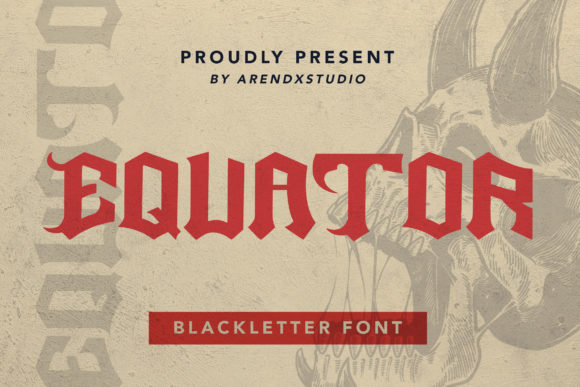
In the vast landscape of digital typography, where sans-serif minimalism and clean geometric forms often dominate the visual hierarchy, there remains a powerful niche for typefaces that evoke history, mystery, and raw intensity. Among these specialized fonts is Equator, a thick-lettered, gothic-styled, and creepy-looking blackletter font. Unlike standard serif or modernist fonts designed for maximum readability in dense paragraphs, Equator serves as a statement piece—a tool for creators who wish to inject an immediate sense of gravitas, antiquity, or unease into their work.
This article explores the unique characteristics of Equator, its technical advantages as a PUA-encoded font, and how professionals across various industries can leverage this distinctive typeface to enhance their creative projects. From horror-themed media to high-fashion branding, understanding the nuances of blackletter design is essential for anyone looking to stand out in a crowded visual field.
Understanding the Anatomy of Equator
To appreciate Equator, one must first understand the tradition from which it springs. Blackletter, also known as Gothic script or Old English, originated in Western Europe during the 12th century. It was the dominant style of writing in manuscripts before the advent of the printing press and remained the standard for formal documents in Germany until the mid-20th century. The style is characterized by its dense, angular strokes, complex interplay between positive and negative space, and an overall impression of solidity and weight.
Equator captures this essence but adapts it for contemporary digital use. Its letters are notably thick, creating a bold silhouette that commands attention even at smaller sizes. The "creepy" descriptor often associated with the font stems from its sharp angles and slightly irregular swashes, which can evoke associations with medieval grimoires, occult symbols, or the atmospheric tension found in horror cinema. However, this aesthetic is not limited to fear; it also conveys authority, tradition, and craftsmanship.
The font’s design philosophy prioritizes impact over subtlety. Where a standard font might recede into the background, Equator demands to be seen. This makes it particularly effective for headlines, logos, and cover art, where the primary goal is to arrest the viewer’s gaze instantly. The heavy ink coverage of the glyphs creates a visual texture that feels tactile, almost like carved stone or embossed leather, adding a layer of physical presence to digital displays.
The Technical Advantage of PUA Encoding
One of the most significant technical features of Equator is its use of Private Use Area (PUA) encoding. To understand why this matters, it is helpful to look at how fonts typically handle special characters. Standard Unicode encoding assigns specific code points to common letters, numbers, and punctuation. However, there are thousands of additional glyphs—swashes, ligatures, alternate characters, and decorative elements—that do not fit into the standard set. In older or less sophisticated font formats, accessing these extras often required complex workarounds, third-party tools, or manual substitution, which could break workflows and cause compatibility issues.
PUA encoding solves this problem by mapping these extra glyphs to unused slots in the Unicode character map. This means that every swash, alternate 'A', decorative flourish, and special symbol in Equator is accessible directly through your operating system’s keyboard settings or font editor. For designers, this translates to efficiency and precision. You no longer need to hunt for alternative versions of a letter within a confusing menu; you simply select the glyph corresponding to the desired variation.
This ease of access allows creators to experiment freely. Want to add a dramatic tail to the end of a word? Need a more ornate initial capital for a chapter heading? With Equator, these adjustments are just a few clicks away. The ability to access all glyphs with ease reduces friction in the design process, allowing the creator to focus on composition and aesthetics rather than technical limitations. It ensures that the font behaves predictably across different platforms, from Adobe Illustrator to web browsers, maintaining its integrity regardless of the medium.
Applications Across Creative Industries
The versatility of Equator extends far beyond a single genre. While its gothic roots might suggest a narrow application, its bold and versatile nature makes it suitable for a wide array of professional and personal projects.
Entertainment and Media
The entertainment industry has long relied on blackletter fonts to signal genre and tone. Equator is an ideal choice for:
- Horror and Thriller Posters: The creepy, jagged edges of the font naturally align with themes of suspense and dread. It can be used for movie titles, book covers, and promotional materials to create an immediate atmosphere of tension.
- Metal and Rock Music Albums: Heavy metal bands have historically used blackletter to convey aggression and rebellion. Equator’s thick strokes provide the visual weight needed for album art and merchandise, ensuring legibility even when distorted or stylized.
- Gaming Interfaces: Role-playing games (RPGs), particularly those with fantasy or dark historical settings, benefit from the archaic feel of Equator. It can be used for quest logs, item descriptions, or faction names to immerse players in the game world.
Branding and Fashion
In the world of branding, standing out is crucial. Equator offers a way to differentiate a brand identity through typography alone.
- Luxury and Streetwear: Many fashion brands incorporate gothic elements to suggest exclusivity, edge, or heritage. Equator can be used for logo designs, taglines, and packaging to give a clothing line a distinctive, memorable look.
- Breweries and Distilleries: Craft beer and spirits often draw inspiration from traditional brewing methods and old-world recipes. Equator’s historical aesthetic fits perfectly with labels that want to emphasize authenticity and craftsmanship.
- Event Marketing: For concerts, festivals, or themed parties, Equator can create posters and flyers that promise an intense, unforgettable experience.
Education and Research
While less obvious, educators and researchers can also find value in Equator, particularly when dealing with historical subjects.
- Historical Presentations: When discussing medieval history, literature, or religious studies, using a period-appropriate font like Equator can help reinforce the context of the material.
- Archival Projects: Digital archives of historical documents may use Equator for headers or navigational elements to maintain a consistent thematic tone without compromising the readability of the main text.
Best Practices for Using Equator
Despite its power, Equator requires careful handling to ensure it enhances rather than detracts from a design. Because of its visual density, it is not suited for body text. Attempting to read large blocks of text in a blackletter font causes eye strain and reduces comprehension. Instead, treat Equator as a display font, reserved for short phrases, titles, and accents.
Contrast is Key
Pair Equator with simpler, lighter fonts to create balance. A classic combination is to use Equator for the headline and a clean sans-serif or serif font for the supporting copy. This contrast highlights the uniqueness of the blackletter while maintaining overall readability. For example, a poster might feature a massive, spooky Equator title, with details listed below in a simple, white sans-serif font.
Consider Color and Background
The effectiveness of Equator is heavily influenced by color choices. High-contrast combinations, such as black text on a white background or white text on a dark red or black background, maximize impact. Subtle pastels or low-contrast backgrounds can make the intricate details of the font disappear, losing the intended effect. Experimenting with textures, such as paper grain or distressed overlays, can further enhance the vintage or eerie feel of the typeface.
Respect the Whitespace
Blackletter fonts are visually "heavy." They require ample whitespace around them to breathe. Crowding Equator with other elements or placing it too close to the edge of a layout can make the design feel cluttered and chaotic. Allow the letters to expand and contract naturally, giving each glyph room to assert its shape.
The Future of Gothic Type in Digital Spaces
As digital design trends continue to evolve, there is a growing appreciation for typographic diversity. The monotony of ubiquitous sans-serif fonts is giving way to a desire for personality and depth. Fonts like Equator represent a return to the expressive potential of typography, reminding us that letters are not just carriers of information but also vessels of emotion and culture.
The integration of advanced encoding standards like PUA ensures that these historical styles remain viable and user-friendly in modern workflows. Creators are no longer constrained by the limitations of early digital fonts; they can access the full richness of blackletter design with the same ease as typing a regular sentence. This accessibility encourages experimentation, leading to innovative applications that bridge the gap between the past and the present.
For hobbyists, business owners, and professionals alike, Equator offers a unique opportunity to add a layer of sophistication and intrigue to their projects. Whether you are designing a logo for a new craft brewery, creating a cover for a mystery novel, or simply adding a touch of gothic flair to a social media post, Equator provides the tools to make your vision come to life. By understanding its characteristics and respecting its strengths, you can harness the power of this thick, gothic, and creepy-looking font to create outcomes that are truly amazing.
In conclusion, Equator is more than just a font; it is a stylistic statement. It invites designers to step outside the comfort zone of conventional typography and explore the darker, more dramatic corners of the alphabet. With its robust PUA encoding and striking visual presence, it stands ready to elevate any creation, proving that even in the digital age, the power of the written word—and its visual form—remains undiminished.