Axenthaur: Elevating Design with Vintage Blackletter Charm
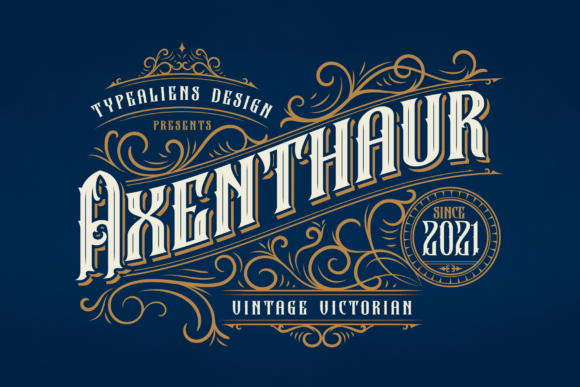
In a digital landscape saturated with clean lines, geometric sans-serifs, and minimalist aesthetics, there is a distinct hunger for typefaces that carry weight, history, and texture. Enter Axenthaur, a detailed vintage-styled blackletter font that doesn’t just sit on the page—it commands attention. This isn’t merely a decorative choice; it is a powerful tool for designers, crafters, and brand builders who want to evoke a sense of tradition, craftsmanship, and timeless elegance.
Axenthaur captures the intricate spirit of historical calligraphy while remaining accessible for modern design workflows. Its sharp serifs, complex ligatures, and dense structure make it ideal for projects that need to stand out through sheer visual interest. Whether you are designing a wedding invitation suite, branding a boutique brewery, or creating a header for a fantasy novel, Axenthaur offers a unique voice that speaks directly to an appreciation for the artisanal.
The Art of Craftsmanship in Typography
Blackletter fonts have long been associated with authority, heritage, and high-end craftsmanship. Historically used in religious texts and legal documents, these typefaces convey a sense of permanence and importance. Axenthaur leverages this psychological association to add instant gravitas to any project. However, unlike some rigid historical reproductions, Axenthaur is designed with a contemporary eye, ensuring it remains legible and versatile enough for modern applications.
For the "crafty" crowd—those who value handmade aesthetics in a mass-produced world—Axenthaur serves as a bridge between the old world and the new. It mimics the look of hand-drawn ink strokes without the unpredictability of actual calligraphy. This consistency is crucial for commercial products where uniformity matters, such as packaging labels or business cards.
- Visual Weight: The dense nature of the font creates strong visual anchors, perfect for headlines that need to grab attention immediately.
- Nostalgic Appeal: It taps into the current trend of retro and vintage design, appealing to consumers who value authenticity and history.
- Versatility: While bold, it pairs well with simpler sans-serif fonts for body text, creating a balanced typographic hierarchy.
Real-World Applications: Where Axenthaur Shines
Understanding the theory behind a font is one thing, but seeing it in action reveals its true potential. Axenthaur is not a "use once and forget" typeface; it has numerous practical applications across various industries. Here is how different users can leverage its unique character.
Wedding and Event Stationery
One of the most popular uses for blackletter fonts is in wedding invitations and event stationery. Couples looking for a formal, classic, or even gothic-inspired aesthetic find Axenthaur particularly appealing. It works beautifully for monograms, couple names, and main titles. When paired with delicate floral illustrations or gold foil accents, the contrast between the heavy, dark letters and soft imagery creates a sophisticated and romantic look.
Consider a save-the-date card featuring Axenthaur for the couple’s initials, set against a textured cream paper background. The font’s detail catches the light, adding a tactile dimension to the design that feels luxurious and personal.
Branding for Artisanal Products
If you run a small business selling handmade goods, Axenthaur can be your secret weapon for brand identity. Think about craft breweries, specialty coffee roasters, artisanal bakeries, or leather goods makers. These industries thrive on the narrative of quality and tradition. A beer label featuring Axenthaur for the brand name instantly suggests a rich, full-bodied product rooted in heritage.
Similarly, for a boutique candle maker, using Axenthaur on wax seals or packaging tags adds a touch of mystery and exclusivity. It signals to the customer that this is not a generic, factory-made item, but something crafted with care and intention.
Editorial and Publishing
In the world of print media, Axenthaur excels as a display font for magazine covers, book titles, and section headers. For authors writing historical fiction, fantasy, or mystery genres, this font helps set the tone before the reader even opens the book. It evokes a sense of adventure, danger, or ancient lore.
Magazine editors can use Axenthaur for pull quotes or special feature headers to break up the monotony of standard text layouts. Its distinctive shape draws the eye, encouraging readers to engage more deeply with the content. Just ensure that body text remains in a highly readable font to maintain balance.
Designing with Consideration: Strengths and Limitations
While Axenthaur is a stunning typeface, like all tools, it requires skillful handling to achieve the best results. Understanding its strengths and limitations will help you avoid common design pitfalls.
Strengths: Impact and Distinctiveness
The primary strength of Axenthaur is its ability to create immediate impact. In a crowded market, standing out is essential, and this font does exactly that. Its intricate details reward close inspection, making it perfect for high-resolution prints where viewers can appreciate the nuances of the letterforms. It also offers a wide range of stylistic alternates (if available in your version), allowing for customization and uniqueness in every design.
Limitations: Legibility and Spacing
The complexity of blackletter fonts means they are generally poor choices for long blocks of text. Using Axenthaur for paragraphs will overwhelm the reader and reduce readability significantly. Reserve it for headlines, titles, logos, and short phrases. Additionally, pay close attention to kerning and spacing. Blackletter fonts often require wider tracking (spacing between letters) to prevent the thick strokes from merging together. Tight spacing can make the text look muddy and difficult to decipher.
Another consideration is color contrast. Because Axenthaur is visually dense, it performs best on light backgrounds. Using it on dark backgrounds can cause the fine details to get lost or appear too heavy. If you must use it on a dark background, consider increasing the font size slightly or choosing a lighter color for the text.
Pairing Axenthaur for Balanced Designs
To let Axenthaur shine, pair it with complementary typefaces that provide contrast. Since Axenthaur is ornate and busy, simple, clean fonts work best alongside it. A modern sans-serif like Helvetica, Montserrat, or Lato can serve as an excellent partner for body text or secondary information. The simplicity of the sans-serif allows the blackletter to take center stage without competition.
For a more cohesive vintage look, you might pair Axenthaur with a classic serif font like Garamond or Baskerville. This combination reinforces the historical theme and creates a harmonious, editorial feel. Avoid pairing it with other decorative or script fonts, as this can quickly lead to a cluttered and chaotic design that lacks focus.
Final Thoughts on Creative Inspiration
Axenthaur is more than just a font; it is a statement. It invites designers and creators to slow down and appreciate the artistry of letterforms. By incorporating this vintage-styled blackletter into your projects, you add a layer of depth and personality that resonates with audiences seeking authenticity and beauty. Whether you are crafting a personal stationery set or building a brand identity for a new business, Axenthaur provides the perfect foundation for creating designs that are both memorable and meaningful.
As you experiment with Axenthaur, remember that context is key. Test it in various sizes, colors, and backgrounds to see how it interacts with other elements. Embrace its historical roots while adapting it to modern needs. With thoughtful application, Axenthaur can transform ordinary designs into extraordinary experiences, proving that sometimes, the oldest styles hold the most power.