Unlocking the Dark Elegance: A Comprehensive Guide to Black Sting Gothic Font
In the vast and ever-evolving landscape of digital typography, finding a typeface that commands attention while maintaining an air of sophisticated mystery is a challenge for many designers. Enter Black Sting, a blackletter font that draws its inspiration from the rich, intricate history of Gothic script. This typeface is not merely a collection of letters; it is a stylistic statement that blends stunning aesthetics with practical utility. Whether you are designing a horror movie poster, crafting a vintage brand identity, or simply looking to add a touch of classic elegance to your creative projects, Black Sting offers a versatile solution that bridges the gap between historical authenticity and modern design needs.
The Anatomy of Mystery: Understanding the Gothic Style
To truly appreciate Black Sting, one must first understand the lineage of the style it emulates. Gothic fonts, often referred to as Blackletter, have their roots in medieval Europe. Historically, these scripts were used for important documents, religious texts, and legal charters. They are characterized by their dense, angular structures, dramatic contrast between thick and thin strokes, and an overall sense of formality and gravity. However, unlike rigid historical reproductions, Black Sting interprets this style through a contemporary lens.
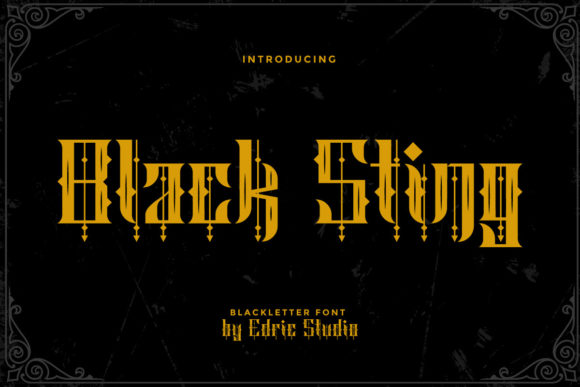
This font captures the essence of the Gothic tradition—its mysterious, horror, classic, and vintage vibes—but refines them for today’s visual standards. The "sting" in its name suggests a sharpness, a precision in the serifs and terminals that gives the letters a predatory yet elegant edge. It is designed to evoke emotion instantly. When a viewer sees Black Sting, they do not just read text; they feel a sense of intrigue, nostalgia, and perhaps a hint of the macabre. This emotional resonance makes it a powerful tool for designers who need to set a specific mood without relying solely on imagery.
Bridging History and Modern Creativity
One might assume that Gothic fonts are relics confined to history books or heavy metal album covers. While those are valid applications, the versatility of Black Sting extends far beyond niche genres. In modern branding, there is a growing trend toward "heritage" aesthetics, where companies want to convey trust, longevity, and craftsmanship. A brewery using Black Sting for its label signals traditional brewing methods. A tattoo studio using it conveys artistic depth and permanence. Even in digital media, such as website headers for fantasy novels or true crime podcasts, this font provides an immediate contextual cue to the audience.
By utilizing a font that feels both ancient and current, designers can create a unique visual tension. This juxtaposition keeps the design fresh and engaging, preventing it from feeling like a mere costume piece. Instead, it becomes a deliberate stylistic choice that enhances the narrative of the project.
Technical Mastery: The Power of PUA Encoding
While the aesthetic appeal of Black Sting is undeniable, its technical architecture is what truly sets it apart for professional use. Many users encounter frustration when working with decorative fonts, only to find that their favorite symbols, ligatures, or special characters are missing. This is where the PUA (Private Use Area) encoding of Black Sting shines as a critical feature.
Standard Unicode encoding has limited space for every possible glyph, especially for complex decorative elements found in blackletter types. To overcome this limitation, Black Sting utilizes the Private Use Area within the font file. What does this mean for you? It means unrestricted access. You are not limited to the standard alphabet. Instead, you can access all of the glyphs and swashes with ease, allowing for a level of customization that is rare in commercial fonts.
Why Glyph Accessibility Matters
In high-end design, details matter. A logo might require a specific ornamental initial, or a flyer might need a unique border element that matches the lettering. With PUA encoding, Black Sting provides a comprehensive toolkit rather than just a basic character set. Designers can:
- Create Custom Monograms: Combine initials with elaborate flourishes that are pre-designed within the font.
- Enhance Typography Hierarchy: Use swashes to draw attention to key words without needing external graphic elements.
- Maintain Consistency: Ensure that every decorative element matches the weight and style of the body text perfectly.
This accessibility ensures that the font remains functional across various software platforms and design workflows. Whether you are using Adobe Illustrator, Photoshop, or even simpler word processors, the ability to call up these special characters via keyboard shortcuts or character maps empowers you to execute your vision without technical barriers.
Practical Applications Across Industries
The adaptability of Black Sting allows it to serve a wide array of industries. Let us explore how this font can be integrated into different creative fields to maximize impact.
Entertainment and Media
In the entertainment sector, atmosphere is everything. For horror films, thrillers, or dark fantasy games, Black Sting is an ideal choice for titles and credits. Its sharp angles and deep blacks mimic the shadows and tension inherent in these genres. Imagine a movie poster where the title seems to emerge from darkness itself—the font does half the work of setting the scene before the viewer even reads the tagline.
Fashion and Lifestyle
Fashion brands often look to subcultures for inspiration. Punk, goth, and alternative fashion scenes have long embraced blackletter aesthetics. By incorporating Black Sting into clothing labels, lookbooks, or social media campaigns, brands can tap into this cultural zeitgeist. It communicates rebellion, individuality, and a connection to underground art movements, appealing directly to consumers who value uniqueness over mass-market conformity.
Education and Publishing
Interestingly, Black Sting also has a place in educational materials, particularly those dealing with history, literature, or art. Textbooks covering the Middle Ages, Shakespearean plays, or Gothic literature can benefit from using this font for chapter headings or pull quotes. It helps students visually connect with the era being studied, making the material more immersive and memorable. It transforms dry academic content into a visually stimulating experience.
Common Misconceptions About Blackletter Fonts
Despite its popularity, there are several misconceptions surrounding blackletter typefaces that can hinder their effective use. One common assumption is that Gothic fonts are difficult to read. While some extreme variations of Blackletter can be challenging to decipher at small sizes, Black Sting is designed with readability in mind. Its proportions are balanced to ensure legibility even in longer passages, provided it is used appropriately.
Another misconception is that these fonts are outdated. As discussed earlier, modern reinterpretations like Black Sting prove that Gothic styles are timeless. They evolve with design trends, shedding unnecessary rigidity while retaining their core character. The key is context. Using Black Sting for a casual blog post about daily routines might feel out of place, but using it for a special edition announcement or a premium product launch can elevate the perceived value of the content significantly.
Getting Started with Black Sting
If you are ready to incorporate Black Sting into your next project, start by experimenting with scale and pairing. Because of its strong visual presence, it works best as a display font—used for headlines, logos, and large text blocks. Pair it with a clean, simple sans-serif font for body text to create a striking contrast. This balance prevents the design from becoming overwhelming and ensures that the message remains clear.
Remember to leverage the PUA features. Take the time to explore the character map and discover the hidden gems within the font. These swashes and ornaments can turn a standard layout into a masterpiece of typographic art. By understanding the history, mastering the technical aspects, and applying thoughtful design principles, you can unlock the full potential of Black Sting.
In conclusion, Black Sting is more than just a font; it is a bridge between the past and the present, offering designers a powerful tool to convey mystery, elegance, and strength. Whether you are adding a special touch to a vintage-inspired wedding invitation or creating a bold new brand identity, this Gothic-inspired typeface provides the perfect foundation for creativity. Embrace its dark allure, utilize its extensive glyph library, and watch your designs come alive with character and depth.