Monshiner Font Review: A Bold Blackletter Asset for Distinctive Design
In the landscape of digital typography, finding a typeface that commands attention without sacrificing legibility or professional integrity is a constant challenge. Many designers struggle to balance aesthetic impact with functional clarity, often settling for generic display fonts that lack character or obscure blackletter styles that are difficult to integrate into modern layouts. Monshiner emerges as a compelling solution to this problem. It is a bold and highly detailed blackletter font designed to serve as a versatile asset for creatives who need to inject immediate visual weight and historical resonance into their work.
This review examines Monshiner not merely as a decorative element, but as a functional tool within a broader design workflow. By analyzing its structural characteristics, usability across various media, and potential limitations, we can determine whether this font aligns with the needs of professionals, entrepreneurs, and creators looking to elevate their visual communication.
Understanding the Core Characteristics of Monshiner
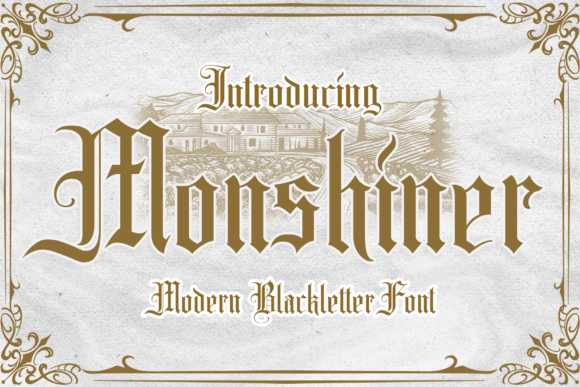
At its foundation, Monshiner is rooted in the tradition of blackletter typography, a style historically associated with medieval manuscripts and early printing presses. However, unlike many revival fonts that strictly adhere to archaic forms, Monshiner has been refined for contemporary application. The defining feature of this typeface is its boldness. Every stroke is substantial, creating a heavy visual presence that demands viewer engagement from the first glance.
The "highly detailed" aspect of Monshiner refers to the intricate rendering of its serifs and internal structures. In traditional blackletter, these details can sometimes become muddy when scaled down or used in low-resolution contexts. Monshiner appears to mitigate this risk through precise vector construction, ensuring that the fine lines remain distinct even at smaller sizes. This level of detail provides texture and depth, allowing the text to function almost like an illustration rather than just informational content.
For designers, this means that Monshiner offers a unique hybrid quality: it possesses the raw, edgy energy of gothic script while maintaining the geometric consistency required for modern branding. The font does not feel like a relic; it feels like a deliberate stylistic choice made with current design trends in mind.
Practical Applications and Real-World Performance
To evaluate the true value of any font, one must look beyond its appearance in isolation and consider how it performs in real-world scenarios. Monshiner’s strength lies in its ability to anchor a design. It is particularly effective in contexts where hierarchy and emphasis are critical.
- Branding and Logos: For businesses in industries such as craft brewing, artisanal goods, music festivals, or heritage fashion, Monshiner provides an instant association with authenticity and craftsmanship. Its bold strokes convey stability and tradition, which can be powerful messaging tools for small business owners aiming to establish trust.
- Editorial Design: Bloggers and publishers looking to break up long-form content may find Monshiner useful for pull quotes, section headers, or cover titles. Its high contrast against standard sans-serif body text creates a dynamic rhythm that keeps readers engaged.
- Packaging and Labels: The detailed nature of the font makes it suitable for packaging where shelf appeal is paramount. On product labels, especially those using dark backgrounds or textured materials, the white space within the letters of Monshiner can create striking negative-space effects.
However, performance also depends on context. While Monshiner excels in display roles, it is less suited for extended paragraphs of body copy. The density of the letterforms can cause eye fatigue if used for reading comprehension. Therefore, its practical value is maximized when used strategically as a display font, paired with simpler, more neutral typefaces for supporting text.
Evaluating Quality, Flexibility, and Consistency
From a technical standpoint, the reliability of a font library depends on the consistency of its character set and the quality of its kerning pairs. Monshiner demonstrates a strong commitment to consistency. The weight distribution across different characters is uniform, preventing certain letters from appearing lighter or heavier than others—a common issue in poorly constructed blackletter fonts.
The flexibility of Monshiner is another significant asset. Because it is a standalone display font, it integrates seamlessly into existing workflows without requiring complex adjustments. Whether you are working in Adobe Illustrator, Photoshop, or InDesign, the font behaves predictably. It scales well, rotates cleanly, and interacts effectively with other graphic elements such as borders, icons, and images.
Furthermore, the font’s detailed structure allows for creative manipulation. Designers can experiment with color fills, gradients, and textures without losing the integrity of the letterforms. This adaptability makes Monshiner a valuable addition to the toolkit of freelancers and agencies who frequently switch between project types and client requirements.
Who Benefits Most from Using Monshiner?
Not every design project requires a blackletter typeface, and Monshiner is no exception. Identifying the right audience for this font helps ensure it is used effectively. The following groups will likely derive the most value from incorporating Monshiner into their projects:
- Marketers and Brand Strategists: Those tasked with creating campaigns that need to stand out in crowded digital spaces will appreciate Monshiner’s ability to capture attention quickly. Its boldness cuts through visual noise, making it ideal for social media graphics, ad banners, and email headers.
- Creative Directors and Artisans: Professionals who value hand-crafted aesthetics will find Monshiner’s detailed rendering appealing. It bridges the gap between digital precision and analog charm, satisfying clients who seek a bespoke look without the cost of custom calligraphy.
- Educators and Content Creators: Educators designing course materials, certificates, or promotional flyers for workshops may use Monshiner to add a sense of formality and importance to their documents. Similarly, bloggers can use it to highlight key takeaways or chapter titles, enhancing the readability and visual interest of their posts.
Conversely, corporate entities focused on minimalism, tech startups seeking a futuristic aesthetic, or medical institutions prioritizing clinical clarity may find Monshiner too ornate or aggressive for their brand voice. Understanding this distinction is crucial for maintaining brand coherence.
Limitations and Considerations for Implementation
No single font is a universal solution, and Monshiner comes with inherent limitations that designers must navigate. The primary constraint is its specificity. Because it is so stylistically distinct, it cannot serve as a general-purpose font. Overuse can lead to a cluttered design, diminishing the impact of the message rather than enhancing it.
Additionally, accessibility should always be a consideration. High-detail fonts can pose challenges for users with visual impairments or dyslexia. When using Monshiner, it is essential to ensure sufficient contrast between the text and background, and to avoid placing it over busy or patterned images. Legibility should never be compromised for aesthetics.
Another practical limitation is the availability of weights and styles. If Monshiner is offered only in a single weight, designers may find themselves restricted in creating typographic hierarchies. In such cases, pairing Monshiner with a robust sans-serif or serif family becomes necessary to provide balance and readability throughout a layout.
Long-Term Value and Final Assessment
When evaluating whether Monshiner is worth adding to your font library, consider its longevity. Trends in typography come and go, but classic styles like blackletter have enduring appeal. As long as there is a demand for designs that evoke tradition, strength, and craftsmanship, Monshiner will remain relevant. Its versatility across print and digital mediums ensures that it will not become obsolete with shifts in platform-specific design standards.
For professionals who frequently engage in projects requiring bold, expressive typography, Monshiner offers a reliable and impactful resource. It eliminates the need to search for multiple similar fonts, saving time and ensuring consistency across a portfolio. While it may not replace the need for a comprehensive set of body text fonts, it serves as a powerful specialist tool that can elevate specific creations from ordinary to exceptional.
In conclusion, Monshiner is more than just a decorative typeface; it is a strategic design element. Its bold, detailed construction makes it an incredibly asset for anyone looking to make a strong visual statement. By understanding its strengths, respecting its limitations, and applying it with intention, designers can harness its potential to create memorable, effective, and aesthetically pleasing work. For those in the 20–50 age demographic who value both functionality and style, Monshiner represents a smart investment in their creative toolkit.