Straight: A Bold Blackletter for High-Impact Design
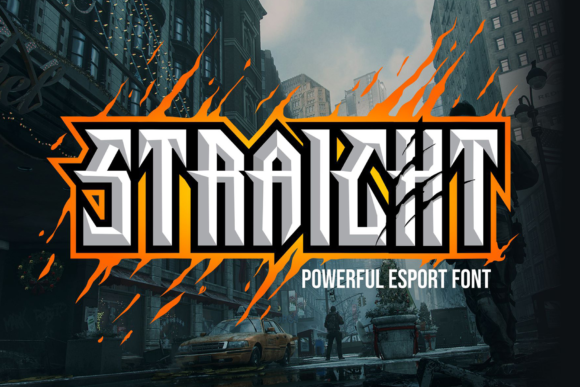
In the landscape of digital typography, where readability and neutrality often reign supreme, there remains a persistent demand for typefaces that command attention. Straight enters this space not as a subtle background element, but as a dominant visual force. It is a blackletter font characterized by its bold, fierce, and dramatic aesthetic. While traditional blackletter styles like Fraktur or Textura have deep historical roots in medieval manuscript culture, modern interpretations like Straight are engineered for contemporary applications where impact is paramount.
For designers, brand managers, and creative professionals aged 20 to 50, selecting a typeface is rarely just about legibility; it is about conveying immediate emotional resonance. Straight serves specific niches within this broader market. It is particularly well-suited for designs such as t-shirts, sportswear branding, logos, advertisements, and general clothing lines. However, understanding its utility requires looking beyond its striking appearance to evaluate its structural integrity, versatility, and long-term value in professional workflows.
Visual Characteristics and Structural Integrity
The defining feature of Straight is its aggressive geometry. Unlike softer serif fonts that invite prolonged reading, Straight is designed for quick, visceral recognition. The letterforms exhibit sharp angles and high contrast between thick and thin strokes, creating a sense of tension and energy. This "fierce" quality makes it an excellent choice for headlines, logotypes, and large-scale display text where the goal is to stop the viewer’s eye rather than facilitate casual browsing.
What distinguishes Straight from other gothic-inspired typefaces is its modernized approach to form. Traditional blackletters can appear dense and difficult to scan at smaller sizes. Straight mitigates some of these issues through cleaner internal spacing and a more uniform weight distribution across the x-height. This ensures that while the font retains its dramatic flair, it does not devolve into visual noise. For professionals evaluating this font for client work, this balance between style and structure is critical. A font that is too ornate may date quickly or fail to render correctly on low-resolution screens, whereas Straight’s bold lines tend to hold up better in digital environments.
The font’s name, "Straight," might suggest simplicity, but the execution is complex. The term likely refers to the directness of its message and the unapologetic nature of its design. There are no hidden flourishes or delicate serifs here; the design is literal and powerful. This directness aligns well with modern minimalist trends that still crave edge. It allows brands to communicate strength and tradition without relying on clichéd heraldic imagery.
Practical Applications in Branding and Merchandise
One of the most common use cases for Straight is in the apparel industry. T-shirts and sportswear require graphics that translate well from screen to fabric. Ink coverage, print resolution, and fabric texture can distort delicate typefaces, causing them to blur or break apart. Straight’s bold weights and solid forms make it highly resilient against these physical limitations. When applied to merchandise, the font maintains its integrity, ensuring that the brand identity remains clear whether viewed on a social media thumbnail or printed on a cotton jersey.
- Sportswear and Athletic Brands: The fierce aesthetic of Straight aligns naturally with themes of competition, strength, and performance. It works effectively for team logos, event posters, and athletic gear branding.
- Streetwear and Fashion: In the fashion sector, blackletter has seen a resurgence as a symbol of rebellion and heritage. Straight offers a clean, modern take on this trend, suitable for luxury streetwear labels that want to evoke history without appearing archaic.
- Logos and Identity Systems: For small businesses and startups, a distinctive logo is essential. Straight provides a strong foundation for monogram-based logos or single-word brand names that need to stand out in crowded markets.
Beyond apparel, Straight finds utility in advertising and editorial design. Posters, album covers, and magazine headers benefit from the font’s ability to create hierarchy. By using Straight for primary headlines and pairing it with a neutral sans-serif for body copy, designers can create dynamic compositions that guide the reader’s eye effectively. The contrast between the ornate headline and the functional body text creates a professional polish that elevates the overall design.
Evaluating Usability and Workflow Integration
For freelancers, bloggers, and publishers, the usability of a font extends beyond its visual appeal. Factors such as licensing clarity, file format availability, and cross-platform consistency play significant roles in the decision-making process. Straight appears to be designed with modern digital workflows in mind. Its character set typically includes standard Latin glyphs, which supports a wide range of languages and special characters necessary for global audiences.
However, users should be aware of the limitations inherent in display typefaces. Straight is not intended for long-form body text. Attempting to set paragraphs in a blackletter font leads to cognitive fatigue and poor readability. Professional practice dictates that such fonts be reserved for short bursts of text—titles, captions, quotes, and slogans. Designers must exercise discipline in their application to avoid overwhelming the audience.
Another consideration is the technical rendering of the font. Because Straight relies on sharp angles and high-contrast strokes, it requires careful kerning and tracking adjustments. Letters with diagonal strokes, such as 'A', 'V', and 'W', may need manual tweaking to ensure optical balance. For those less experienced with typography, this learning curve is manageable but present. Utilizing built-in kerning pairs provided by the font creator can streamline this process, but understanding the underlying principles of spacing remains valuable.
Target Audience and Strategic Fit
Who benefits most from incorporating Straight into their projects? The answer lies in understanding the intent behind the design. If the goal is to communicate trust, stability, and approachability, Straight is likely the wrong tool. Fonts like Helvetica, Garamond, or Open Sans serve those purposes far more effectively. Straight is best suited for contexts where differentiation and memorability are prioritized over neutrality.
- Entrepreneurs in Competitive Markets: Startups looking to carve out a niche in saturated industries (such as fitness, music, or entertainment) can use Straight to project confidence and authority.
- Creators and Artists: Musicians, podcasters, and visual artists often need branding that reflects their personal style. Straight offers a versatile palette that can adapt to various genres, from heavy metal to modern hip-hop.
- Educators and Trainers: While not suitable for textbooks, Straight can be effective in presentation slides, workshop materials, or promotional flyers where engagement is key.
For serious hobbyists and small business owners, the cost-benefit analysis of purchasing a premium font like Straight often yields positive returns. Unlike free alternatives that may lack proper kerning or consistent styling, paid fonts offer reliability and legal protection. This reduces the risk of copyright disputes and ensures that the final product meets professional standards. In an era where digital presence is synonymous with business credibility, investing in quality typography is a strategic move.
Long-Term Value and Sustainability
Trends in design come and go, but certain aesthetic choices endure. Blackletter has been a staple of Western typography for centuries, and its modern adaptations continue to find relevance. Straight capitalizes on this longevity by stripping away unnecessary ornamentation while retaining the core characteristics that make the style compelling. This timeless quality means that designs created with Straight are less likely to feel outdated in five or ten years.
Furthermore, the flexibility of Straight allows it to be used across multiple mediums. Whether embossed on leather goods, embroidered on caps, or displayed on a website header, the font adapts well to different textures and scales. This multi-platform compatibility adds to its long-term value, making it a worthwhile asset for any design toolkit. Professionals who invest in such versatile typefaces can reuse them across diverse projects, maximizing the return on their investment.
Conclusion
Straight represents a purposeful intersection of historical influence and modern utility. It is not a font for every project, nor should it be. Its bold, fierce, and dramatic nature demands respect and careful handling. When applied correctly, however, it delivers a level of impact that simpler typefaces cannot match. For designers and business owners seeking to make a strong first impression, Straight offers a reliable, stylish, and effective solution. By understanding its strengths and respecting its limitations, users can leverage this font to create designs that are not only visually striking but also strategically sound.