Rombenk: Strategic Typography for High-Impact Visual Communication
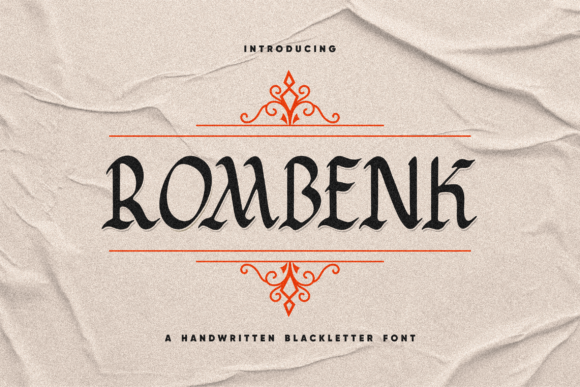
In an era where digital attention spans are shrinking and visual noise is at an all-time high, the choice of typography is no longer merely aesthetic—it is a strategic business decision. For entrepreneurs, marketers, and creative professionals, every element on a page contributes to brand perception, readability, and conversion. Among the vast array of typefaces available, Rombenk stands out as a highly detailed and assertive blackletter font that offers significant potential for elevating specific types of creations. However, its power lies not in indiscriminate application, but in intentional, thoughtful deployment.
Rombenk is not a background utility; it is a statement. Its intricate details and commanding presence make it an incredible asset to any font library, provided you understand its weight, its history, and its psychological impact on the reader. This guide explores how to integrate Rombenk into your workflow to achieve better results in branding, communication, and long-term design consistency.
Understanding the Strategic Value of Blackletter
To use Rombenk effectively, one must first appreciate the genre it belongs to. Blackletter, or Gothic script, has deep historical roots in Western calligraphy and printing. It conveys authority, tradition, solidity, and often, a sense of heritage or exclusivity. Unlike modern sans-serif fonts that prioritize neutrality and speed, blackletter demands attention. It slows the reader down. In a content landscape dominated by rapid scrolling, this friction can be a feature, not a bug.
When you choose Rombenk, you are signaling that the content associated with it is substantial, established, or deliberately crafted. It works exceptionally well for:
- Brand Identity: Establishing a strong, memorable logo for brands in brewing, music, law, or luxury goods.
- Editorial Design: Creating striking headlines for magazines, blogs, or newsletters that aim for a premium feel.
- Event Marketing: Generating urgency and gravitas for concerts, festivals, or exclusive launches.
The "highly detailed" nature of Rombenk means that it carries visual texture even when small. This detail requires careful handling. If used incorrectly, the intricacies can collapse into illegibility. Therefore, the strategic value of Rombenk is tied directly to your ability to manage contrast and hierarchy.
Intentional Application: When and How to Use Rombenk
Many designers fall into the trap of using bold or decorative fonts everywhere because they look impressive. This is a tactical error. Rombenk’s assertiveness makes it unsuitable for body text, navigation menus, or lengthy paragraphs. Its optimal role is as a headline or display font. By reserving Rombenk for key moments of communication, you preserve its impact. If every word is shouting, nothing is heard.
Hierarchy and Contrast
The most effective way to utilize Rombenk is through stark contrast. Pairing the ornate, heavy strokes of Rombenk with a clean, minimalist sans-serif or a simple serif creates a dynamic tension that guides the eye. The blackletter draws attention to the core message, while the complementary font ensures the supporting information remains accessible. This approach supports better user experience (UX) by balancing creativity with functionality.
For example, a small business owner launching a new craft beer line might use Rombenk for the product name and primary tagline, evoking tradition and craftsmanship. Meanwhile, the ingredients list, nutritional info, and website navigation should remain in a highly legible, neutral typeface. This separation of concerns ensures that the brand feels premium without sacrificing usability.
Contextual Relevance
Before integrating Rombenk into a project, ask yourself: Does this font align with the emotional tone of the message? Blackletter can feel archaic, aggressive, or solemn depending on the context. It is less suitable for tech startups aiming for futurism or healthcare providers seeking calmness. It shines in contexts where strength, history, or artistic flair is desired. Educators and bloggers might use it sparingly for chapter headers or special announcements to break the monotony of standard text, adding a layer of personality to their digital space.
Risks of Misuse: Clarity vs. Decoration
The primary risk of using Rombenk is the compromise of accessibility and readability. Because of its complex letterforms, it can be difficult to scan quickly. Overusing such a font can lead to cognitive load, causing readers to disengage. This is particularly detrimental in marketing materials where the goal is clear communication and conversion.
Furthermore, low-resolution displays can distort the fine details of Rombenk. On mobile devices or small screens, the intricate serifs may blur or merge, resulting in a muddy appearance that undermines the professional quality of the work. Decision-makers must consider the medium before committing to the typeface. If the primary distribution channel is social media thumbnails or email previews, test the font rigorously at small sizes. If it fails to maintain its shape, it is not the right tool for that specific task.
Another consideration is audience perception. While some audiences view blackletter as sophisticated, others may associate it with outdated styles or niche subcultures. Understanding your target demographic is crucial. A freelancer working with corporate clients might find Rombenk too informal or aggressive, whereas a publisher targeting alternative music fans would find it perfectly aligned with their brand voice.
Planning for Long-Term Brand Consistency
Typography is a long-term investment. Once you introduce a distinctive font like Rombenk into your brand identity, it becomes part of your visual language. Changing it later can confuse customers and dilute brand recognition. Therefore, the decision to adopt Rombenk should be made with a long-term perspective.
- Audit Your Current Assets: Review existing logos, websites, and print materials. Identify where a bold, historic font could strengthen the message without overwhelming the user.
- Define Usage Guidelines: Create a style guide that specifies exactly when and how Rombenk can be used. Define minimum sizes, color contrasts, and pairing fonts. This prevents inconsistent application across different teams or vendors.
- Test Across Platforms: Ensure the font renders correctly on web, mobile, and print. Check for licensing issues if you plan to use it commercially. Some blackletter fonts have restrictive licenses that limit usage to screen only or require separate licenses for print.
By treating typography as a strategic component of your operations, you move away from arbitrary design choices and toward a cohesive, professional output. Rombenk, with its assertive character, can serve as the anchor of this strategy, providing a point of differentiation in a crowded market.
Enhancing Creativity and Productivity Through Structure
Paradoxically, limiting your font palette can enhance creativity. When you have a limited set of tools, you are forced to think more deeply about composition, spacing, and imagery. Using Rombenk as a singular focal point encourages you to simplify other elements. This reduction in visual clutter can improve productivity, as decisions about layout become clearer. There is less ambiguity when one font clearly dominates the hierarchy.
For educators and content creators, this clarity translates to better learning outcomes. Students or readers can focus on the content rather than struggling to decipher the presentation. By using Rombenk to highlight key concepts or section breaks, you aid in information retention. The distinct visual weight acts as a signpost, guiding the reader through complex material.
Conclusion: Making Better Decisions with Rombenk
Rombenk is more than just a font; it is a tool for emphasis, a marker of quality, and a vehicle for brand storytelling. Its potential to elevate any creation is undeniable, but only when wielded with precision. As professionals navigating the complexities of modern communication, our goal is to connect clearly and memorably. Thoughtful typography is a cornerstone of that connection.
Do not add Rombenk to your library simply because it looks cool. Add it because you have identified a need for authority, tradition, or striking visual contrast in your projects. Plan its use carefully, respect its limitations, and pair it wisely. When you approach Rombenk with intention, it becomes an invaluable asset in your quest for better results, stronger branding, and more effective communication. The difference between a good design and a great one often lies in these deliberate, strategic choices.